Caring across cultures: Manitoba researcher wins funding
Dr. Heather Campbell-Enns wins ASRP funding for research on family-provided dementia care
Meet Dr. Heather Campbell-Enns
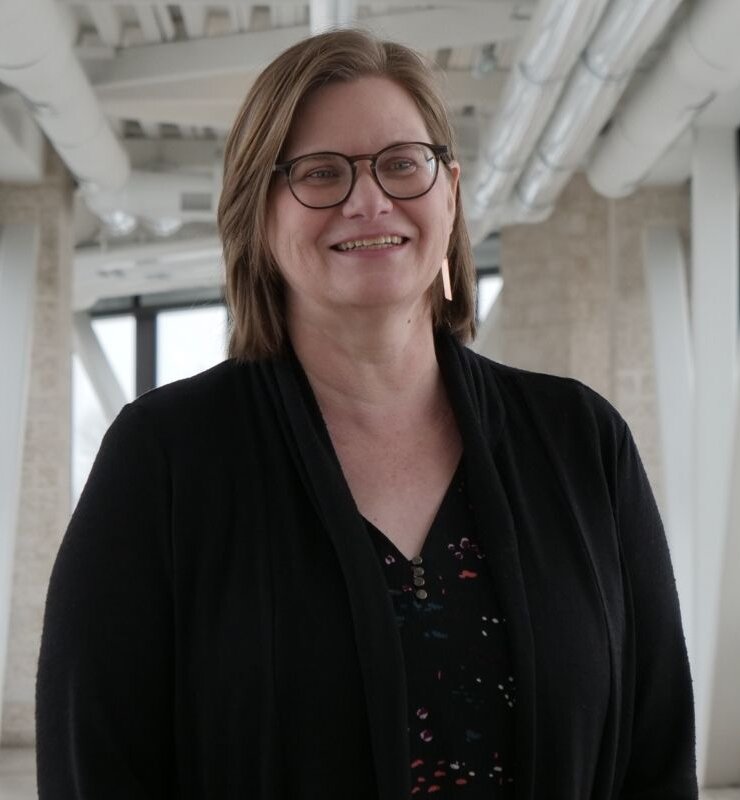
Dr. Heather Campbell-Enns lives in a multigenerational home — something she jokes makes her “a bit of an outlier” in her community. But for many households, she says, “it’s the norm.” Living with several generations under one roof helped shape how Heather views family life and guided her work as a psychologist.
Heather teaches at the Canadian Mennonite University and holds a Canada Research Chair in Families and Aging. She studies how families care for their relatives living with dementia and how culture shapes that care. Now, with support from the Alzheimer Society Research Program (ASRP), generously co-funded by Research Manitoba, she’s working with immigrant families in Manitoba to understand their experiences, starting with the Filipino community.
Heather isn’t interested in research surveys or checklists — she believes it’s important to talk face-to-face with people to truly gain insight into their experiences. So, she and her team meet with families to hear how they divide up caregiving and what really helps them manage the challenges it brings.
Heather’s interest in dementia care grew over the years. She initially studied housing and long-term care transitions, and she kept running into families trying to figure out dementia and how it impacted the daily lives of everyone involved. Their questions didn’t quite fit her research, and she realized they needed something else. This prompted her to change the direction of her research and begin focusing on dementia care and the relationships that hold it all together.
“The ASRP grant is crucial,” Heather says. “It allows me to build this project properly by hiring a research coordinator, partnering with community groups and compensating advisors and participants for their time and expertise. I’m very grateful for that support.”
Inclusive dementia support in Manitoba
What Heather wants is a fuller, more inclusive understanding of dementia care in Manitoba. By listening carefully and working directly with communities, she hopes to spotlight what families are already doing well and pinpoint where they need more support.
Heather doesn’t have a personal dementia story in her own family, but she feels a real connection to the families she meets. She’s spent her career studying how people support each other through tough health situations, and dementia care is another area where families work incredibly hard. She understands the effort it takes to keep relationships strong and all the care that happens quietly, day after day.
She’s grateful to the Alzheimer Society and the donors who make this research possible. Their support helps her do work that respects families and the different cultural traditions that shape how they care for each other. What she learns will lead to better programs, stronger supports and more understanding for families who are doing everything they can.
Most of all, she hopes the stories families share will help others feel less alone. When research reflects real life, it can truly change the status quo. And for families caring for someone living with dementia, even small changes can mean the world.