Do you know the risk factors?
When it comes to dementia, there are risk factors you can change, and ones you can’t. Learn what you can do to reduce your risk.
What are risk factors?
Risk factors are aspects of your lifestyle, environment and genetic background that increase the likelihood of getting a disease.
Risk factors on their own are not causes of a disease. However, risk factors represent an increased chance, but not a certainty, that dementia will develop. Similarly, having little or no exposure to risk factors does not necessarily protect a person from developing dementia.
Some risk factors can be changed and some that cannot, including genetics and aging.
Modifiable risk factors
Some risk factors are modifiable, meaning that they can be changed. In 2024, The Lancet revealed that 45% of cases of dementia could potentially be delayed or reduced, focusing on 14 key modifiable risk factors.
The Lancet’s research also noted that addressing most risk factors in mid-life (18-65) had the greatest impact in delaying or preventing the onset of dementia later in life. Keep reading to see the list of these risk factors.
1. Low levels of cognitive engagement
Cognitive engagement is thought to support the development of a “cognitive reserve”. People with a larger cognitive reserve can delay getting dementia symptoms. People with a smaller cognitive reserve are at a higher risk of developing dementia.
A person who left school at an early age is more likely to have a smaller cognitive reserve than a person who stayed in full-time education for longer or who continued learning throughout their life.
Also, a person who has not used a range of mental skills during their lifetime of work — for example, memory, reasoning, problem-solving, communication and organizational skills — is more likely to have a smaller cognitive reserve.

2. Hearing loss
Mild levels of hearing loss increase the risk of cognitive decline and dementia. Though it is still unclear how exactly it affects cognitive decline, hearing loss can lead to social isolation, loss of independence and problems with everyday activities.
3. High LDL Cholesterol
There are good and bad types of cholesterol. The bad cholesterol (known as low density lipoprotein) leads to a buildup of cholesterol in the arteries. This can increase the risk of stroke and cause more proteins to build up in the brain. Studies find that high levels of bad cholesterol increase dementia risk.

4. Depression
People who experience depression in mid or later life have a higher risk of developing dementia. However, the relationship between depression and dementia is still unclear.
Many researchers believe that depression is a risk factor for dementia, whereas others believe it may be an early symptom of the disease, or both.
5. Traumatic brain injury
People who experience severe or repeated head injuries are at increased risk of developing dementia. Brain injuries may trigger a process that might eventually lead to dementia.
This particularly affects athletes in boxing, soccer, hockey and football, which often cause repeated head injuries.
Falls are the leading cause of traumatic brain injury. Falling is especially dangerous for older adults.
6. Lack of physical activity
Physical inactivity in later life (ages 65 and up) increases the risk of developing dementia.

7. Diabetes
People with type 2 diabetes in mid-life (ages 45 to 65) are at an increased risk of developing dementia, particularly Alzheimer’s disease and vascular dementia.
8. Smoking
The evidence is strong and consistent that smokers are at a higher risk of developing dementia vs. non-smokers or ex-smokers.
It’s never too late to quit! Smokers who quit can reduce their risk of developing dementia.

9. High blood pressure
People who have consistently high blood pressure (hypertension) in mid-life (ages 45 to 65) are more likely to develop dementia compared to those with normal blood pressure.
High blood pressure can increase the risk of developing dementia, particularly vascular dementia, because of its effect on the heart, the arteries and blood circulation.
10. Obesity
Obesity in mid-life (ages 45 to 65) increases the risk of developing dementia. Obesity also increases the risk of developing other risk factors such as type 2 diabetes.
11. Excessive alcohol consumption
Drinking excessively (more than 12 standard drinks per week), can increase your risk of developing dementia.

12. Social isolation
Social isolation can increase the risk of hypertension, coronary heart disease, depression and dementia.
Staying socially active may reduce the risk of dementia. Social interaction may also help slow down the progression of the disease.
13. Air pollution
The relationship between air pollution and dementia is still unclear. However, it’s estimated that those living close to busy roads have a higher risk of developing dementia because they may be exposed to higher levels of air pollution from vehicle emissions.
14. Vision loss
People with uncorrected vision loss may be more likely to avoid social situations and become more isolated over time. Social isolation and depression are both risk factors for dementia.
Research shows that those who have corrected vision loss do not have an increased risk of developing dementia.
It’s never too soon, or too late, to make changes that will maintain or improve your brain health. Learn more about managing some of these risk factors on our brain health & risk reduction page.
Unmodifiable risk factors
There are a few risk factors for dementia that are unmodifiable, meaning they cannot be changed or improved to help reduce our risk. These are aspects of our lives we don’t have control over.
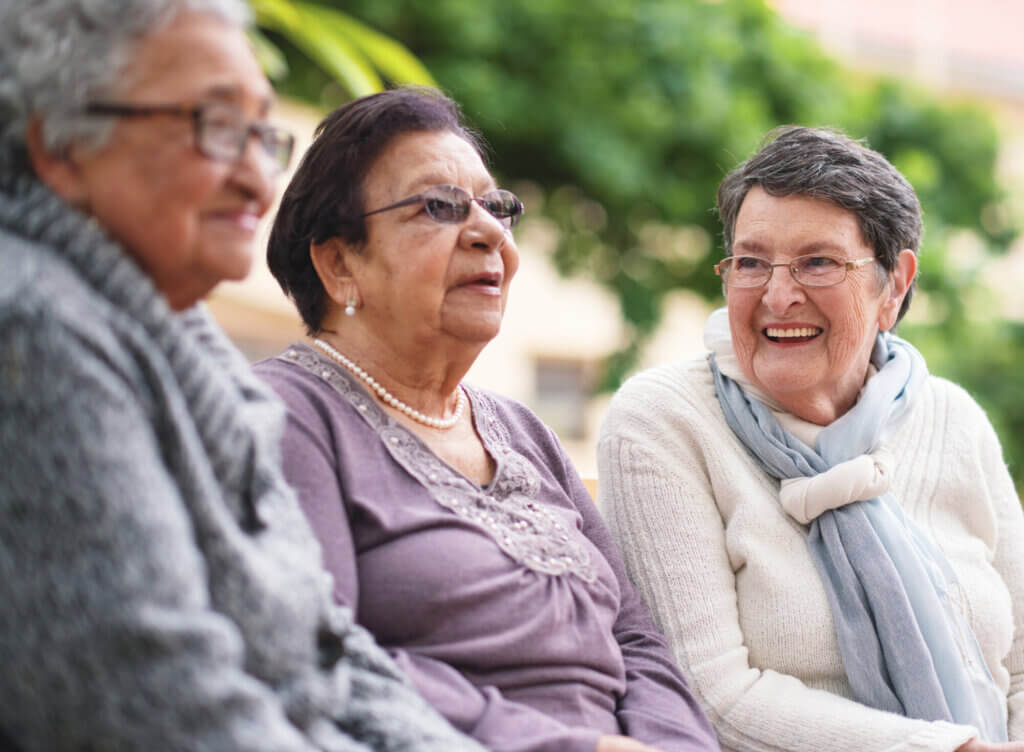
Age
Dementia is not a normal part of aging. However, age is the strongest known risk factor for dementia. The older you become, the higher the risk:
- One in 20 Canadians over age 65 has Alzheimer’s disease, the most common form of dementia
- After 65, the risk of developing Alzheimer’s disease doubles approximately every five years, with one in four Canadians over 85 having Alzheimer’s disease
While rare, dementia can also affect people under 65. This is known as young-onset dementia.
Gender
Women have a higher risk of developing Alzheimer’s disease than men. While the reasons for this are still unclear, some of the potential contributors include women generally living longer on average than men and changes in estrogen levels over many women’s lifetimes.
For types of dementia other than Alzheimer’s disease, men and women have the same risk. There is not much data yet available on non-binary people and dementia, though some research is in progress.

Genetics
We don’t yet fully understand the role of genes in the development of dementia. We do know that most cases of Alzheimer’s disease are sporadic, meaning they do not run in families. Only rare instances of Alzheimer’s disease are inherited or familial, accounting for two to five percent of all cases.
Check out the Genetic testing and Alzheimer’s disease page on our National website for more information.