Dementia-friendly communities
We can all help people living with dementia feel safe and included by supporting them in the community — whether at the post office, their favourite shop, using transportation or enjoying hobbies and recreation.
What is a dementia-friendly community?
Dementia-friendly communities focus on supporting people living with dementia, so they feel welcomed, included and comfortable in places they live, work and play. By educating people about the disease and helping them understand that those living with dementia experience the world differently, these communities can reduce stigma, anxiety and frustration.
A “community” can be a location like a neighbourhood or city, but can also be groups of people with shared interests like a book club, business, local coffee shop, faith group or grocery store.
Taking steps toward a more dementia-friendly community can be as simple as learning more about dementia and making small adjustments to your social and physical environments. Small changes can make a real difference.
Social characteristics
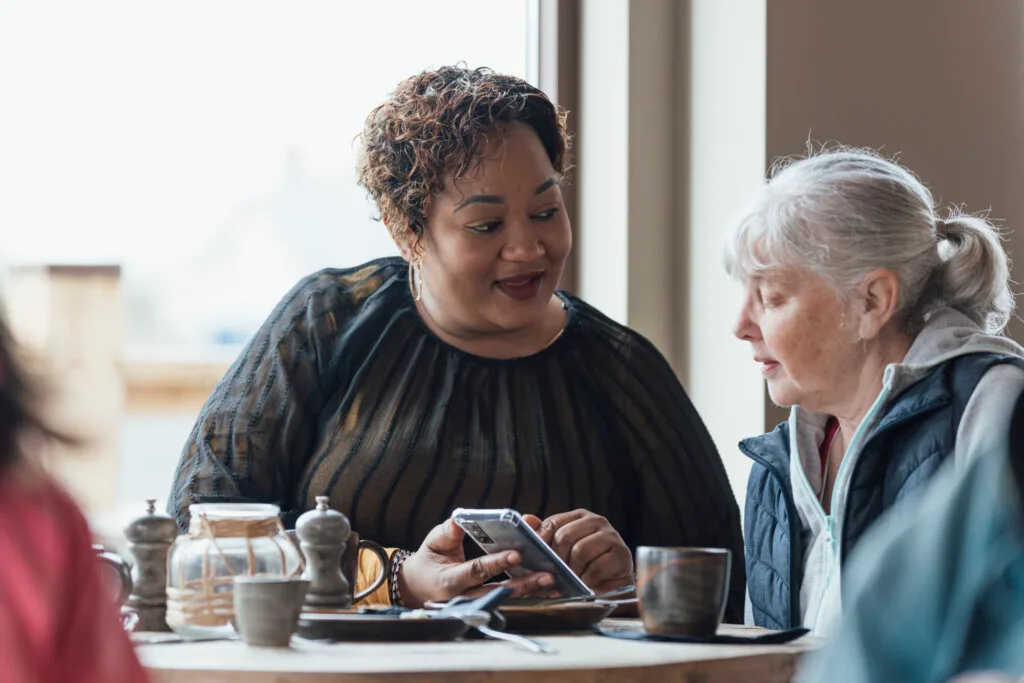
In a dementia-friendly environment, community members recognize that:
- Everyone has a role in supporting, valuing and including people living with dementia
- A person living with dementia is more than their diagnosis
- Dementia can affect someone’s thinking, behaviour, emotions and physical capabilities
Physical characteristics
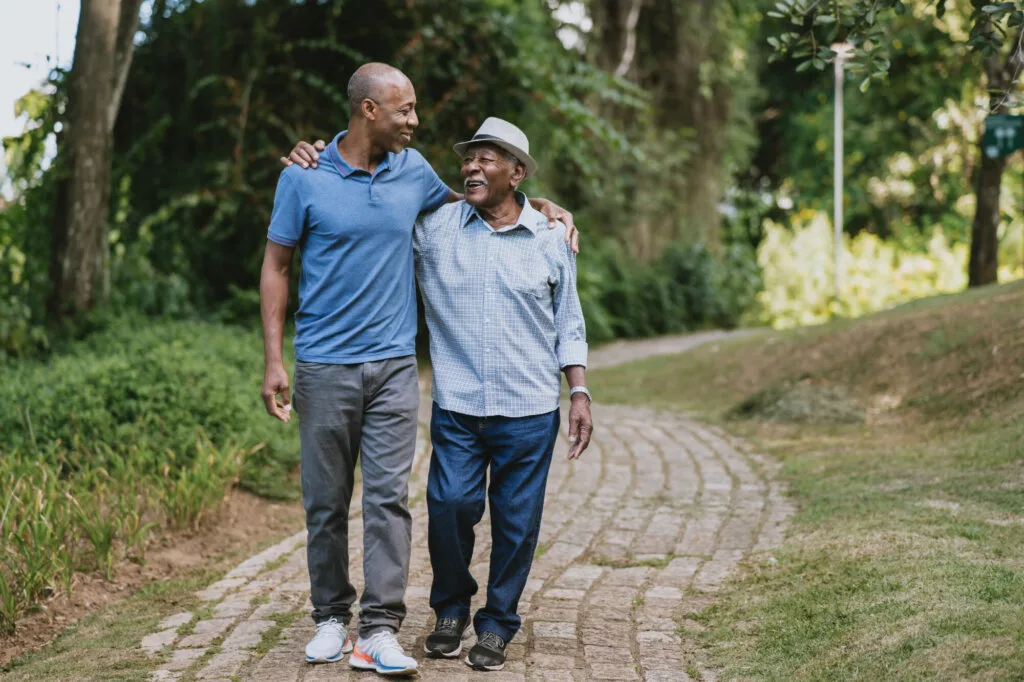
A welcoming physical environment includes:
- Open areas for activity and rest
- Clear signage at eye level
- Flat, wide and unobstructed sidewalks and walkways
- Clearly marked accessible washrooms in public spaces
- Distinctive structures that can act as landmarks
What can your community do?
Sixty per cent of people living with dementia live at home in their communities and want to continue participating in community life after a diagnosis. Supportive, dementia-friendly communities help make that possible.
There are many ways your community can become more dementia-friendly – and we can help! You can:
- Request dementia education from the Alzheimer Society to help community members understand dementia and learn how to offer appropriate assistance.
- Include people living with dementia in community or organizational programming.
- Encourage staff in your city, town or municipality – whether at libraries or community centers, or parking and by-law officers, police and firefighters – to be educated about dementia and be able to communicate effectively with people living with dementia.
- Work with others in the community, such as shopkeepers, bank tellers and bus drivers, to receive dementia education specific to their job.
Building Dementia-Friendly Communities online course

Dementia-Friendly Canada created a self-paced Building Dementia-Friendly Communities online course to help professionals working in the recreation, library, retail, restaurant and public transportation sectors who are interested in fostering dementia-friendly awareness within their organizations.
This self-paced 75-minute course will give organizations the knowledge and skills needed to increase support, inclusion and accessibility (both in the social and physical environments) for people living with dementia.
Dementia-friendly communities resources
Canadian Charter of Rights for People Living with Dementia
What is a dementia-friendly community (video)
Small changes help make a dementia-friendly community (video)
Ways you can be dementia friendly: Ensuring participation (video)
Ways you can be dementia friendly: Providing assistance (video)
Ways you can be dementia friendly: Responding compassionately (video)
Language & writing
Dementia-friendly language guidelines
Tips for dementia-friendly written material
ASM dementia-friendly printable signage
Dementia-friendly printable signage
Dementia-friendly communications tips
Dementia-friendly communication tips (video)
In-person & remote interactions
Tips for dementia-friendly interactions
“The person I am with has dementia” card
Touch quilts bring comfort, happiness and can lessen feelings of sadness and fear for someone affected by dementia.
Caring volunteers craft touch quilts in hopes of providing one to every person residing in a personal care home in Manitoba, as well as creating a sense of community giving. This initiative helps create awareness and education opportunities about the importance of brain health, dementia and how the Alzheimer Society of Manitoba can help those affected by dementia.
To learn more, receive a touch quilt or to volunteer, please contact Leah Bueckert, Education Coordinator, at lbueckert@alzheimer.mb.ca.

Help your organization become more dementia-friendly.
To request a dementia-friendly communities presentation for your organization, please contact Tiana Alphonso at 204-943-6622 or talphonso@alzheimer.mb.ca.
Testimonial